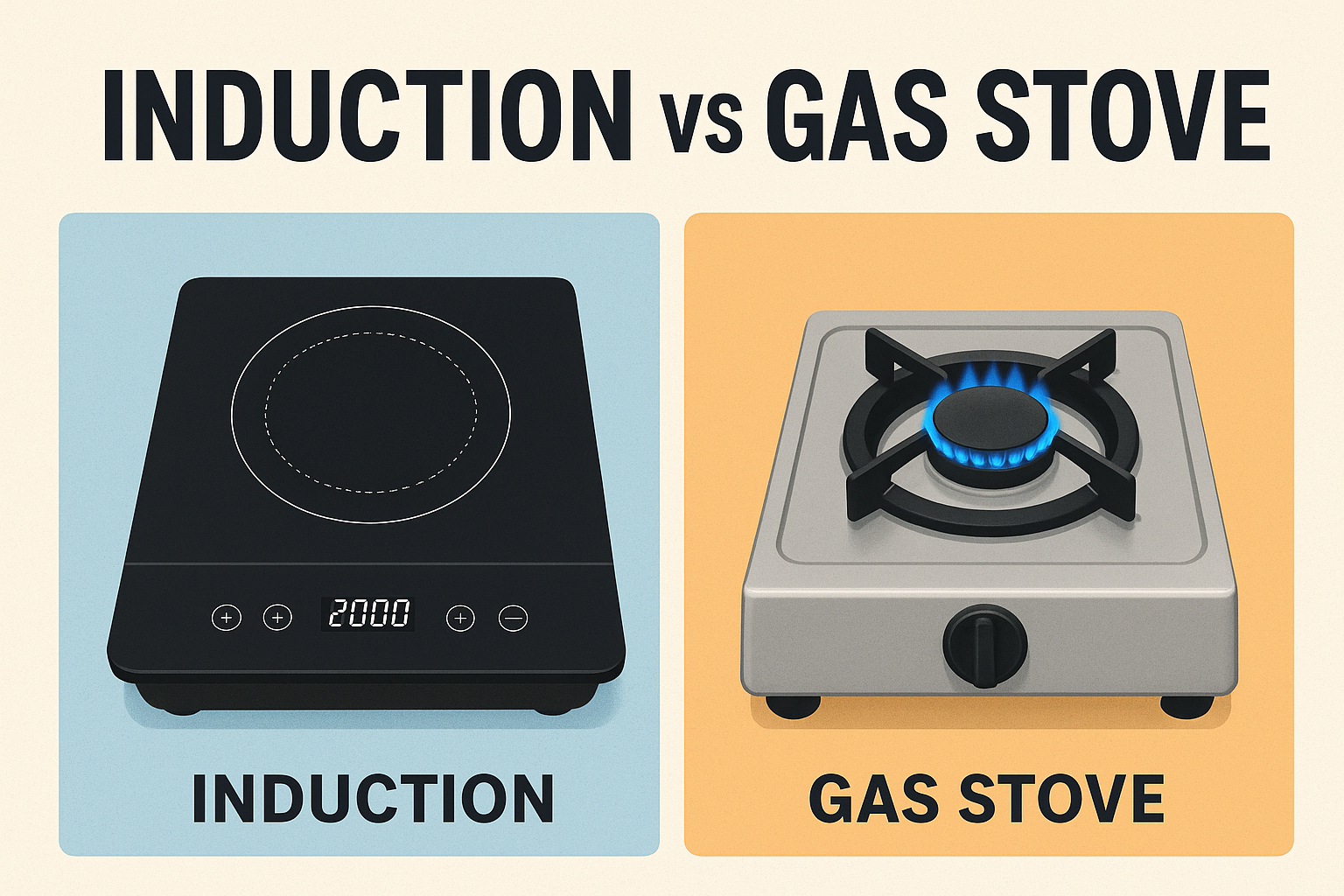
Induction vs Gas Stove
Comparing Induction vs Gas Stove — with special emphasis on cost (monthly electricity vs LPG), practical pros/cons, and what might suit different kinds of households in India (say Mumbai, where you are).
Induction vs Gas Stove: What’s the Deal?
Cooking on an induction cooktop or on a conventional LPG gas stove — both have pros and cons. Which works better depends on your cooking habits, preferences, and the relative cost of electricity vs LPG in your city.
⚖️ What is Induction Cooking vs Gas Cooking
- Induction Cooktop: Uses electricity and electromagnetic heating to directly heat the base of induction-compatible cookware. The heat is concentrated and efficiency is high (less wasted energy).
- Gas Stove (LPG): Uses liquefied petroleum gas. Flame heats the vessel. It works with nearly all kinds of cookware and doesn’t require special utensils, but energy transfer is less efficient (some heat is lost to surrounding air).
So in principle — induction cooking offers cleaner, more energy-efficient heating; gas offers flexibility, familiarity, and utensil compatibility.
Monthly Cost: Electricity (Induction) vs LPG Cylinder (Gas)
Let’s compare approximate monthly costs for a typical Indian household — but note: this varies a lot depending on electricity tariff, LPG cylinder cost, and how much you cook.
🔌 Induction (Electricity) Costs
- According to one source, to boil 10 litres water on induction uses ~ 0.96 kWh (units). If electricity is ₹5/unit, that’s ~ ₹4.8.
- Another estimate: for day-to-day cooking for a family, induction’s monthly electricity cost comes out to roughly ₹700–₹850 (for ~2 hours cooking per day).
- Some others put it at ₹360–₹540 per month — if consumption is low and electricity tariff is favourable.
So induction cooking tends to cost between ~₹500 to ₹900/month under typical usage + tariffs.
🫓 LPG Gas (Cylinder) Costs
- For a typical household, gas consumption may work out to about 1.2 cylinders/month, leading to monthly costs around ₹950–₹1,100.
- Another comparison suggests that gas cooking tends to be more expensive than induction when LPG is unsubsidised and electricity tariff is moderate or low — because induction is more efficient.
Hence, gas cooking monthly cost for a family often ends up around ₹1,000 or a bit more (depending on frequency of cooking and cylinder use).
✅ What This Means: Induction Usually Wins on Running Cost
For many households — especially those cooking moderately — induction tends to be cheaper per month than LPG gas. Even if you cook every day, the electricity cost via induction often works out lower than refill + usage cost of LPG cylinders. This aligns with various studies concluding that induction cooking is more economical than gas when electricity is reasonably priced.
Other Considerations: Beyond Just Cost
Cost isn’t the only factor. Here are other pros/cons that often matter:
👍 Advantages of Induction
- Energy efficiency: More of the electricity input is converted to usable heat — less wastage.
- Faster heating & precise control: Heating can be faster; temperature control is more precise.
- Cleanliness and safety: No open flame, less risk of gas leaks, easier to clean, less indoor pollution.
- Lower maintenance: Induction cookers have fewer components to maintain (no regulators, gas pipes, frequent cylinder refills).
👍 Advantages of Gas Stove
- Flexibility: Works with all types of cookware — no need for induction-compatible pots/pans. Sometimes cooking style (especially traditional Indian cooking: heavy frying, “bhunaai”, pressure cooking) suits gas flame better.
- Independence from power supply: Gas cooking doesn’t rely on electricity — helpful during power cuts.
- Lower upfront cost: If you already have LPG cylinder connection and cookware, initial setup cost may be lower or comparable to induction (depending on stove type and cookware).
⚠️ Limitations / Challenges
- Induction: Requires magnetic-base cookware; may not work with older or aluminium vessels. Also depends on reliable electricity supply.
- Gas: Less efficient (heat loss), recurring cylinder refills, risk of leakage/fire, indoor air pollution from combustion — and if LPG becomes expensive or subsidy ends, running cost rises.
This is why many urban Indian households adopt a hybrid approach — using induction for daily cooking, boiling, reheating; and gas for heavier cooking or when power is unreliable.
So — Which One Should You Pick? (Especially for a City Like Mumbai)
Given the numbers and typical urban lifestyle — here’s a quick decision guide:
- If you have reliable electricity, cook daily for a small/medium family, and don’t mind getting compatible cookware → Induction Cooktop is likely more economical and convenient for regular use.
- If you value cookware flexibility, frequent heavy-Indian cooking (rotis, deep-frying, pressure cooking), or face frequent power cuts, then Gas Stove (LPG) offers robustness and versatility.
- For many, a hybrid setup works best — induction for everyday cooking and light meals; gas for heavier cooking, emergencies, or when induction isn’t feasible.
Conclusion
Switching to an induction cooktop often makes sense — especially in a city context like Mumbai — because:
- Monthly running cost tends to be lower than LPG (₹500–₹900 vs ~₹1,000 or more).
- Induction cooking tends to be more efficient, clean, safe, and convenient.
- For households looking to cut expenses or reduce hassle, induction offers tangible savings and comfort.
At the same time, gas stoves still have their place — especially for traditional cooking styles, heavy use, and households that prefer flexibility and don’t want to depend solely on electricity.
For many Indian homes, a hybrid kitchen — both induction + gas — strikes the right balance.
If you like — I can run a sample cost-calc for 2025 Mumbai rates (using current LPG cylinder price and typical BSES electricity tariff) and show 3 scenarios: small family, medium family, and heavy-use family.
That way you can get a more concrete sense of what your monthly expense might look like.
Do you want me to prepare that?