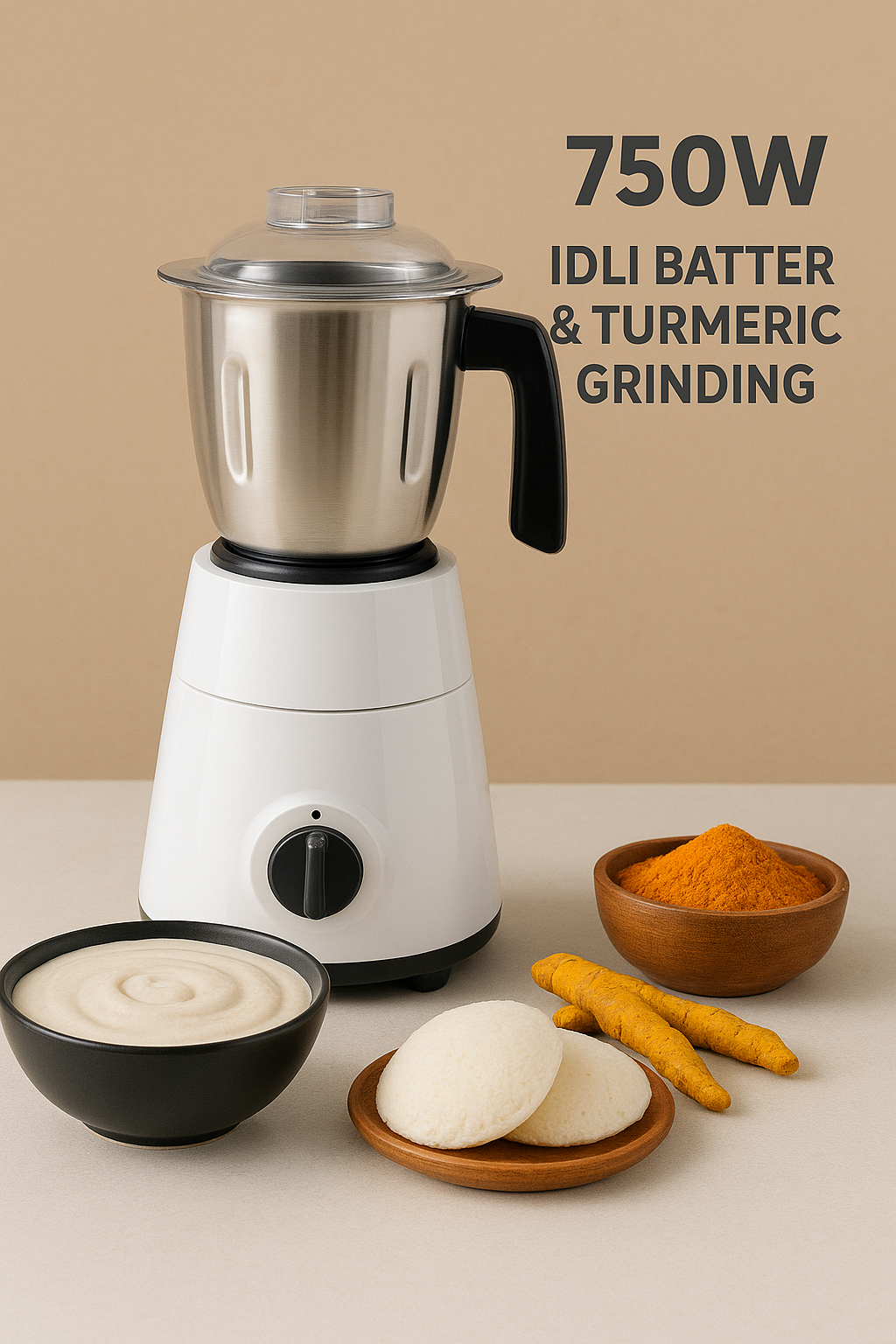
750w vs 500w mixer grinder
Below is a complete, SEO-friendly blog on 750W vs 500W Mixer Grinder, with a clear explanation of why 750W is better for idli batter & turmeric grinding.
750W vs 500W Mixer Grinder: Which One Should You Buy for Your Home?
When it comes to choosing the right mixer grinder for an Indian kitchen, the wattage makes a noticeable difference. Two of the most common options are 500W and 750W mixer grinders. While both can perform basic tasks, they cater to different cooking needs—especially when it comes to heavy-duty grinding like idli/dosa batter, turmeric, masalas, or dry spices.
This guide will help you understand the key differences so you can make the right choice for your cooking style.
1. Power & Performance
🔹 500W Mixer Grinder
- Suitable for basic grinding & blending
- Works well for:
- Chutneys
- Smoothies
- Tomato purée
- Soft spices (coriander, jeera, pepper)
500W mixers are budget-friendly but not ideal for tough ingredients.
🔹 750W Mixer Grinder
- Designed for heavy-duty grinding
- Ideal for:
- Idli/Dosa batter (thick, smooth consistency)
- Turmeric (hard root)
- Dry masalas (garam masala, sambar powder)
- Coconut grinding
- Large quantities
Why?
Higher wattage means:
- The motor can run longer without overheating
- Blades rotate faster and cut tougher ingredients
- More uniform grinding
2. Idli/Dosa Batter: Why 750W Wins
Grinding idli batter requires:
- Consistent power
- High torque
- Ability to grind soaked rice & dal into a smooth, airy batter
A 500W mixer tends to heat up, struggle, or take longer.
A 750W mixer grinder delivers:
- Faster batter grinding
- Better fermentation (because batter doesn’t heat up as much)
- Smoother texture
If idli/dosa is a regular part of your meals, 750W is the clear winner.
3. Turmeric Grinding: 500W Cannot Handle It
Grinding raw turmeric (haldi) sticks is one of the toughest tasks for any mixer grinder.
- 500W mixers often stall, overheat, or stop working
- They may even damage the motor
750W mixer grinders, however:
- Crush hard haldi into fine powder
- Work faster
- Are more durable for such tasks
For homemade turmeric powder lovers, 750W is mandatory.
4. Energy Consumption
You may think a 750W mixer consumes more electricity—but in most cases:
- It grinds faster, so run time is less
- Power usage difference is negligible
Example:
500W mixer may take 8 minutes,
750W mixer may finish in 3 minutes.
So the cost difference in electricity is minimal.
5. Noise Level
- 500W mixers usually operate quieter.
- 750W mixers are slightly noisier due to a stronger motor—but still manageable.
If noise is a concern, pick models with noise-reduction design.
6. Price Comparison
- 500W mixers: Budget-friendly (₹1,500–₹3,000)
- 750W mixers: Pricier but value for money (₹3,000–₹6,000)
Given their durability and performance, 750W models provide better long-term value.
Final Verdict: 750W vs 500W Mixer Grinder
| Feature | 500W Mixer | 750W Mixer |
|---|---|---|
| Daily chutneys | ✔️ Good | ✔️ Excellent |
| Idli/Dosa batter | ❌ Struggles | ✔️ Best |
| Turmeric grinding | ❌ Not recommended | ✔️ Ideal |
| Masala grinding | ⚠️ Light only | ✔️ Heavy-duty |
| Price | ✔️ Cheaper | ⚠️ Higher |
| Durability | Moderate | High |